
32-inch wheels are coming. How do we feel?
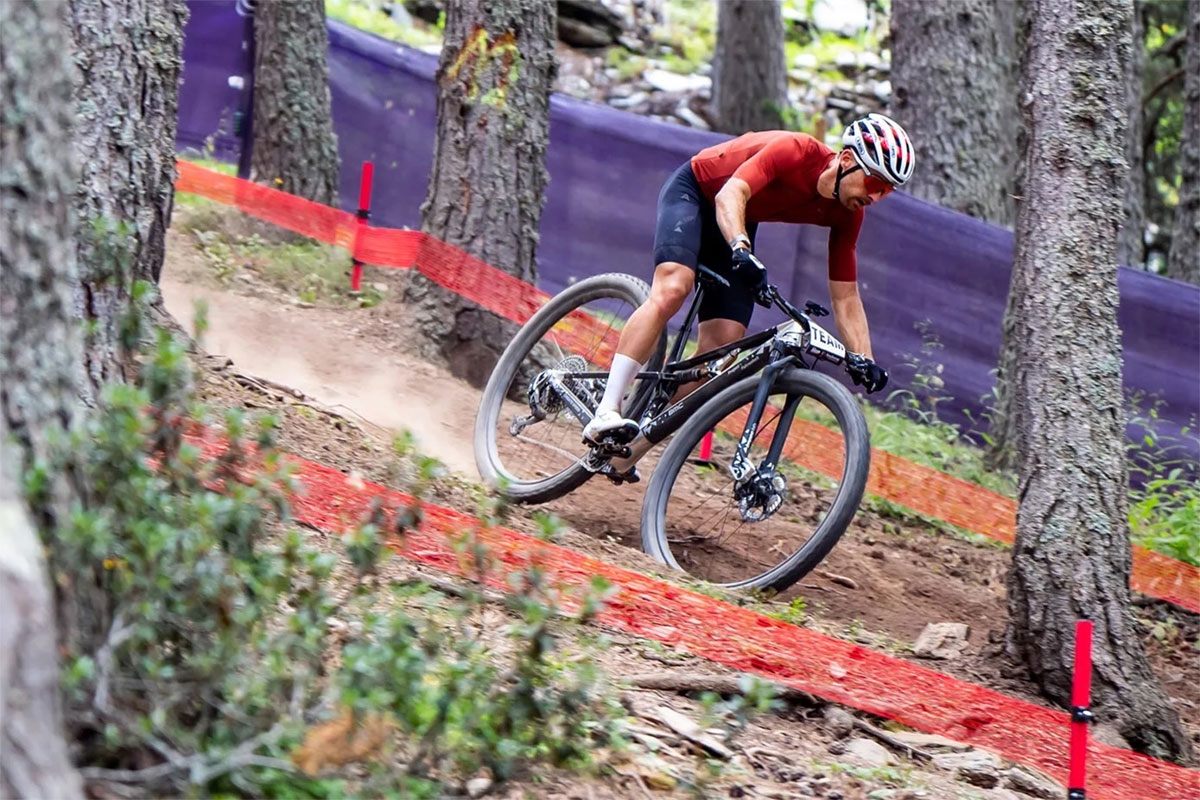
I mean, we’ve been here before. 26-inch to 29-inch. Then the rogue 27.5-inch ‘goldilocks’ size that wasn’t.
What does it all mean? It means the bike industry is having a push to generate more trade not by growing the industry pie, but by trying to inspire us existing consumers to buy more. And… it might work *
The wheel turns
Over a decade ago – probably closer to 15+ years – we saw a goldrush from 26-inch to 29-inch which paid off big time. A slow start ended with a de facto new standard size for MTB wheels as well as an actual new standard – Boost sizing.
Then the 27.5-inch idea lured some of us – myself included – to try that. A mass move happened from manufacturers keen not to miss the boat a second time round.
It was not so successful, although both my Bird Zero AM and Pace RC627 are decent bikes. Yet neither roll as quickly as a 29er.
After that, we’ve had the e-MTB goldrush. Lots of people have switched to the point where those of us relying on leg power alone are in the minority on the Surrey Hills, if not in general.
To my mind this has been the only new tech that’s brought in genuinely new riders to the scene, even if many may come from MX looking to ride trails that are illegal by motorbike. Even so, there are signs that market is now saturating.
Enter 32-inch wheels…
The UCI have acknowledged the 32-inch wheelsize will be permitted in XCO racing next year (but no mullet set ups). That’s significant because Maxxis have a 32-inch 2.4 Aspen available, Vee Tyre are close behind and many wheel and tyre manufacturers are likely to pile in.
Fork manufacturers won’t be far behind.
How do I feel about 32-inch wheels?
On the one hand, if these things are faster, more comfortable and provide more grip then what’s not to like?
29ers ultimately won their argument and 32-inch may do the same. I feel this wheel size could be an inevitability for gravel bikes, initially at the increasingly large tyred, off-road oriented end of the spectrum.
In fact I don’t have too many concerns that the 32-inch wheel size can be made to work with a wide variety of frame sizes and genres.
It will just be a question of how – IF – the pros and cons shake out favourably.
Bigger concerns
My bigger concern is… this doesn’t actually expand the bike industry. It’s yet another moment where existing riders are offered another ‘best thing ever’.
But what it results in is companies taking sales off each other in a finite sized market which ultimately keeps them fairly weak. Their relative success may change depending on who gets to market most effectively, but overall profits and revenue remain capped.
What I’d like to see is the industry banding together to market cycling far more broadly. We need an effective lobbying effort for active travel, biking to school and work, cycle lanes, active leisure and everything else that will generate sales beyond the current group of enthusiasts.
I mean sure, if we want to buy bling, don’t let anyone stop us, but we aren’t going to save the industry.
There are signs that some people get this.
Reading in Enduro magazine from 41 Publishing about their Think Tank Brixen gathering is encouraging but so far it remains a talking shop. It’s outcomes are currently being written up in a series, starting with Brixen Papers #01: Industry’s Next Innovation Isn’t a Bike which makes interesting reading.
By all means look forward to 32-inch. I am certainly never going to say never, it could be just the ticket. But the bigger wins lie elsewhere in my view.
* Will it work? I don’t think it will.
Every cyclist loves coffee!
☕Buy Matt a coffeeThere are 9 replies to Matt so far
We really appreciate comments from our readers. If you have something to say, we'd love to hear from you.
To add to the conversation, jump to our comments form or reply to individual comments.
November 25, 2025 at 1:33 pm
Elliot says:
It’s interesting which ‘innovations’ are pushed solely by the bike industry to make more money (cough* electric gears *cough), and which one’s riders have to keep asking for. Apart from a select few, bike companies were extremely resistant to 29. Then although pretty much no one apart from Kirk Pacenti was asking for it, the whole industry jumped on 650b.
There’s a long established larger wheel size that’s been simmering away under most radars, 36. Yet it sounds like the industry is getting ready to push an almost unheard of size that (again) no one is asking for, 32. I think bike companies should stop messing around with half measures and go straight to 36. Will have to see what bikes comes along, but I might be interested in trying 32 anyway.
From a practical perspective, bikes will start getting too long to hang off racks on cars soon, or wheel under doorways, if they get much bigger. Looking around at early 32 bikes it appears some early 29er mistakes are repeating themselves, such as making the head angle steeper when it doesn’t need to be, or tucking the rear wheel in leading to a very slack actual seat tube angle wrapped around it.
, or add a new comment
November 25, 2025 at 1:39 pm
Elliot says:
As a side note, I hope there are some decent forks coming. That BMC has the same spindly 32mm stanchion DT Swiss forks as my Fairlight, but with machined extensions MacGyvered onto the dropouts
, or add a new comment
November 26, 2025 at 10:09 am
Matt says:
I don’t think it will be long before we see forks appearing, again at the XC end of the market first.
, or add a new comment
November 26, 2025 at 10:09 am
Matt says:
“Just go straight to 36-inch” – there speaks a man who is 6’4!
I can’t believe bike builders are going to repeat the mistakes they made with 29ers. Some of those choices were terrible compared to the current generation (Dave’s Intense Spider/killer bike and the Inbred 29ers a case in point). But I agree, some of the bikes I’ve seen so far look awful.
Bike length is a key point. In order to get geometry that might work you end up with very long bikes which probably ride well but might not be all that wieldy. Trails will have to evolve too in that case.
Fair to say, without trying one we don’t yet know…
, or add a new comment
November 26, 2025 at 10:57 pm
Tony says:
I still quite like getting out on my 27.5 Orange. Definitely the lightest bike I own and so flick-able in the tight turns.
On more open trails the 29ers are brilliant and for a 5’10” rider I can’t see the benefits to me of riding a gate … sorry 32er…
In conspiracy mode – is this more for eMTBer where the heavy wheels won’t make much difference and it leaves more space for motors etc plus all the extra weight is less important?
, or add a new comment
November 27, 2025 at 6:35 pm
Jez says:
Don’t think those size wheels would work that well even on an e- bike Tony.
Weight as you say is not so critical on one, but the added gyroscopic effect would potentially want to keep you upright and would make the gate…… sorry 32er barge through trails and off the edge of a cliff fairly promptly.
Apart from that I agree with your thoughts. 👍
, or add a new comment
November 27, 2025 at 9:32 pm
Matt says:
I feel 32-inch or 36-inch is likely going to be too big for MTB but will roll very nicely for gravel. But having a different wheel-size for one type of bike doesn’t make sense from a manufacturing perspective.
We did say all this about 29ers though. I remember being told they’d never make a wheel strong enough, too much inertia, no tyres or forks etc. etc. And yet today, 29ers are standard for riders of all sizes.
It might be that 32-inch is a sweet spot but I’ll let others do the experimenting for me…
, or add a new comment
November 27, 2025 at 5:30 pm
Jez says:
I always compare the changing wheel sizing on Pedal bikes to motorbike wheel sizes. These have not changed much at all for decades, probably longer.
If you wish the bike to be easy to manoeuvre go for smaller wheels.
Stable at speed, potentially larger wheels, but that would have an adverse affect on tight singletrack, as the bikes would become too long surely?
Off road Enduro motorbikes have always been mullet ( larger narrower front wheel, smaller wider rear wheel)
I guess an XC bike may benefit from a 32/36 inch wheel for rolling inertia, but perhaps have a smaller rear wheel 29er for being agile in tight turns?
Also the extra strength/ weight of a larger wheel would potentially be an issue for a lightweight bike?
As you state Matt, it also depends on your height too.
Can’t imagine myself on a 36 inch bike, I’d need a step ladder to get on/ off.
I guess there is an optimum wheel size for a mountain bike, but I believe 36 is too large for Enduro style bikes.
, or add a new comment
November 27, 2025 at 9:37 pm
Matt says:
A really, really good point Jem about motorbikes which have settled on a size and generally stick with it. I don’t ride motorbikes so had no idea about that.
It also reminds me of my days in the motor trade – sell the benefits, not the features. In the cycle world, it’s almost always features (wheels/tyres/shocks/forks) with very little about why one thing is better than another. So no surprise to see another new feature arrive.
, or add a new comment