Ride report: Going Dutch Day 3 – Middelburg to Rotterdam
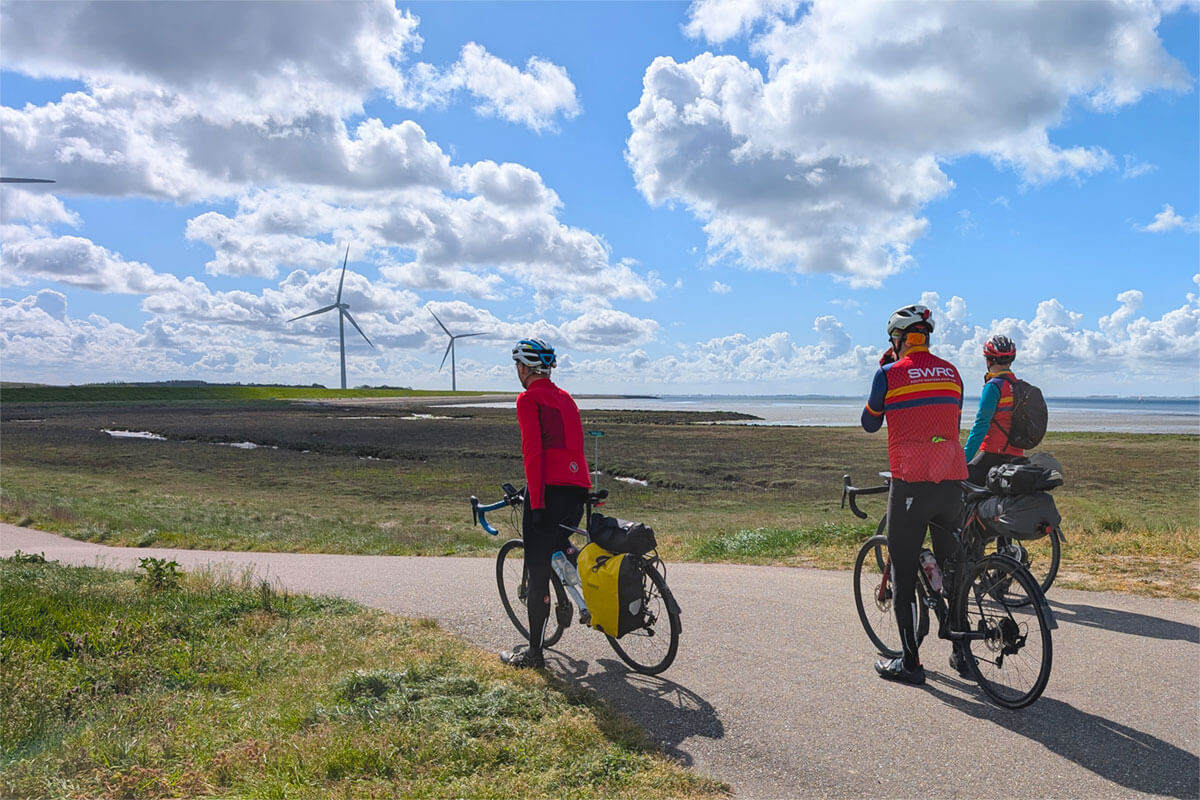
We woke on day 3 of our exploration of the Netherlands to cool temperatures, a blue sky and a steady wind out of the north.
The wind wasn’t our ideal scenario, considering we were headed broadly to the North East, right into the wind. It wasn’t super strong but definitely kept temperatures down and helped us decide our itinerary for the day.
Route planning
To get to Rotterdam from Middelburg you have a couple of options.
The shortest route is north, then along the coast road over a couple of longish bridges. A variation of this is to go inland and cross at the 5.2km (3.25 mile) Zeelandbrug (Zeeland Bridge) and then head north to pick up the coast route, in both cases reaching Rotterdam from the west.
These northern options offered us either a strong head wind off the North Sea, or a longer roundabout route before heading north again back into the same wind.
Another option is inland, but to ‘stay low’ after the Zeelandbrug and come in to Rotterdam from the south rather than the west.
Staying to the south kept the distance at a comfortable 70-ish miles but also gave us the chance to spend some time at the Watersnoodmuseum (Flood museum) at Ouwerkerk. More on that later but we decided to cross at the Zeelandbrug and stay south.
First, back to the Poorthuys B&B in Middelburg where these deliberations took place over a large and well catered breakfast. I was feeling… great!
Necking it
I had slept very well but more importantly my neck was at long last in a good place. Sometime during the night I had stretched cautiously and something seemed to just slot into place. It was like turning off a switch.
For the first time in a long time my neck was feeling supple and pain free. I think in part this is the result of a very comfortable bed at the Poorthuys and in part the result of carefully exercising the opposite muscles to those that seem to go into spasm over time.
I’ve been pretty assiduous about this over some months now – for example if your trapezoids are tight, do pull downs to work the opposite muscles but in a very, very controlled manner with low resistance. It’s not prescribed by any professional but anecdotally seems to help.
The result was Sunday morning in Middleburg and my neck – which in the long-term remains fragile – was feeling better than its been for in months.
Heading out of town
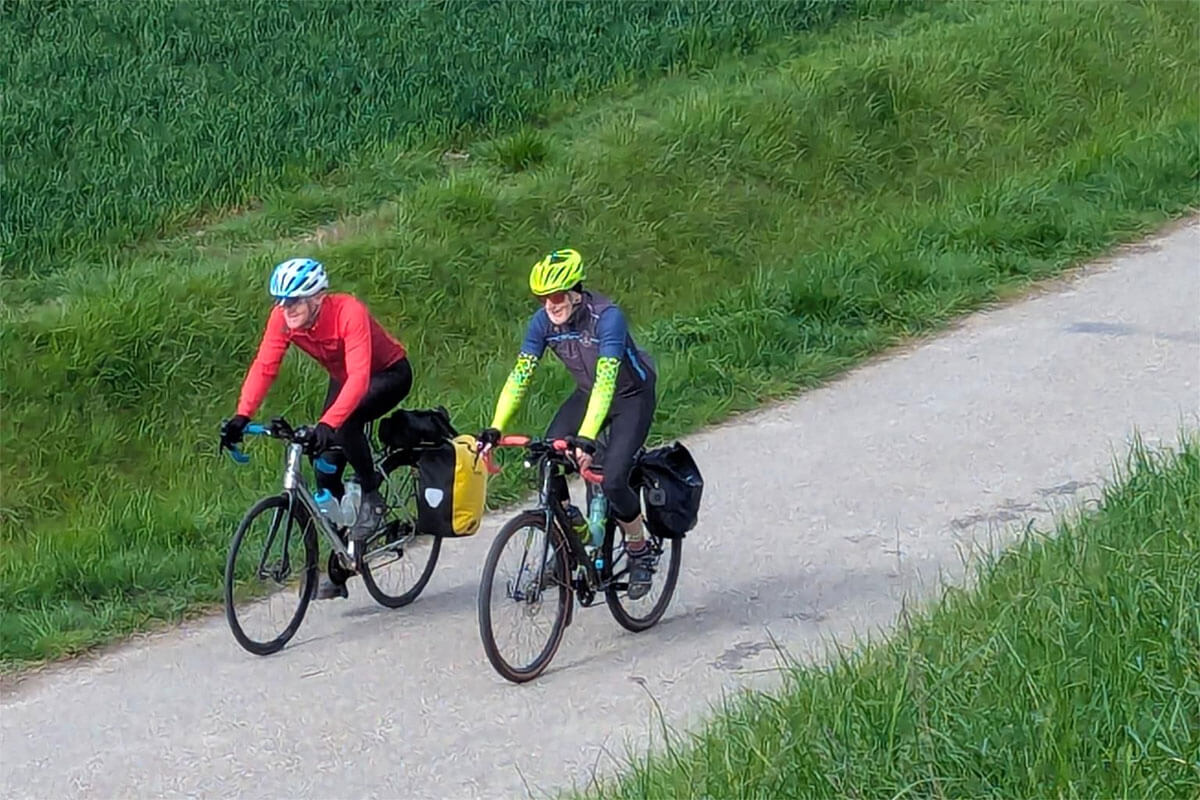
Middelburg is really quite a compact town and soon we – including a recovering JR – were heading out of town past the railway station. It was a little blustery but mercifully not too bad and we soon made our way out to Arnemuiden on typical red tarmac’d cycle paths.
It wasn’t long before the benefits of the cycle lanes made themselves felt. Today was a Sunday and it was clearly a day for sport cycling. We passed many small groups through the morning headed west toward Middelburg with riders in club jerseys. The lanes are two-way but everyone was able to organise themselves to stay on their side of the path without drama. In the UK I think you’d see less discipline and larger groups.
Another benefit is for people on mobility scooters. At one point an old lady was pacing us at speed like a Japanese Derny rider – those things don’t hang about! More broadly, the paths were pretty busy with riders of all kinds.
The real pleasure of the network is that they even link up quite rural areas. 10 miles out of Middelburg we were still on cycle paths completely separated from the road and this continued most of the way into Rotterdam. Impressive.
Dutch alps
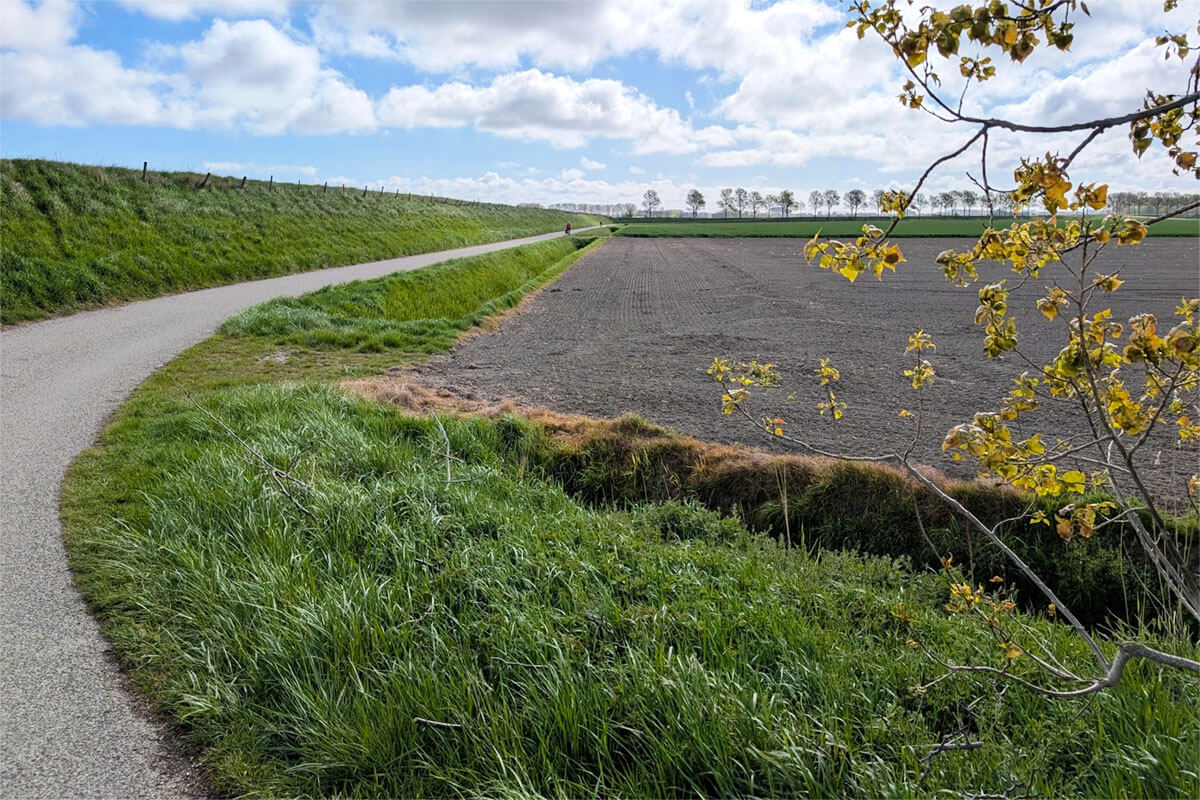
Much of the land in the Netherlands of course is reclaimed from the sea. This heavily engineered landscape has its own charms but hills is not one of them. But what the Dutch lack in hills they make up for in headwinds as we soon discovered.
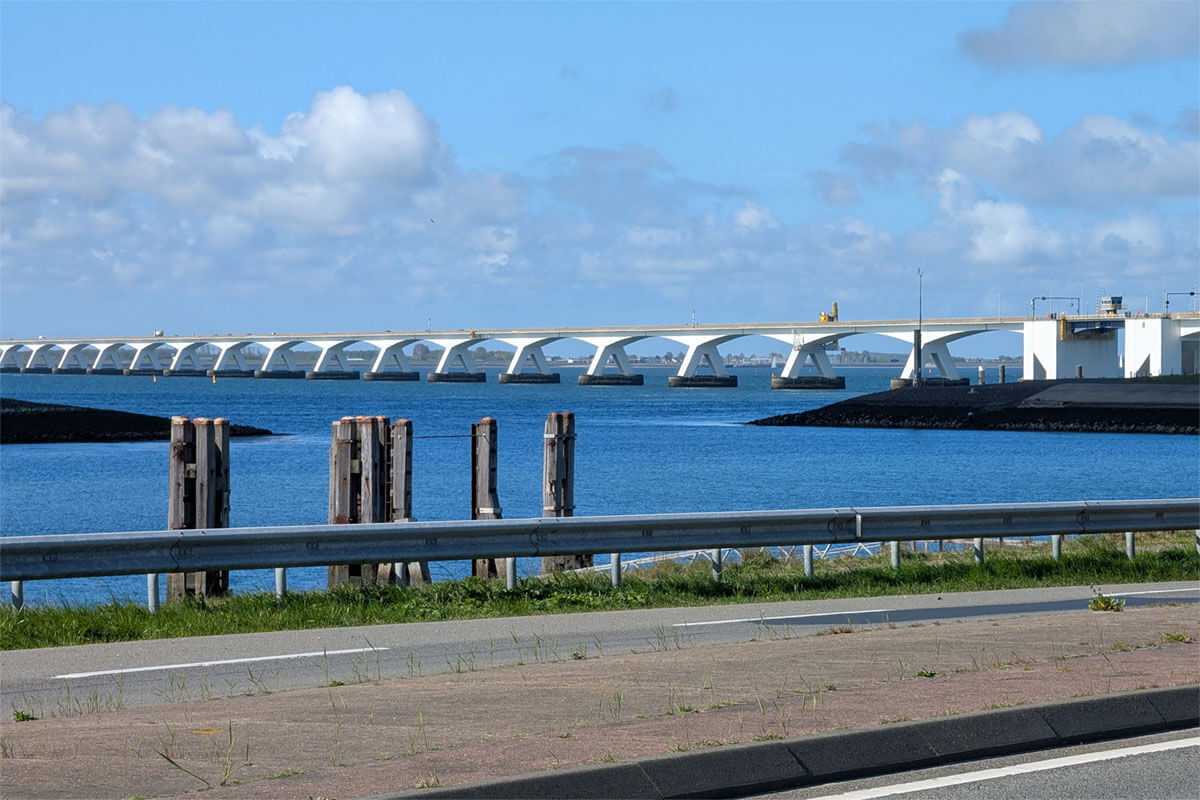
While heading east we could shelter to an extent behind the side of dykes. After 14 miles we turned north to head up to the Zeelandbrug (bridge) straight into the wind which brought a different perspective on things. Nevertheless we progressed and were soon crossing the Oosterschelde, part of the Zeeland Delta.
The bridge gave us our maximum altitude for the day – 21m (70ft) above sea level! The crossing is long – just over 5km (3.5 miles) – and very exposed.
John’s injury didn’t seem to be troubling him; in fact the day and a half of rest seemed to give him plenty of energy as he towed us across. Pretty soon MarkJ dropped off with Gordon to shepherd him over, then it was JR, DaveS and myself with gulls for company.
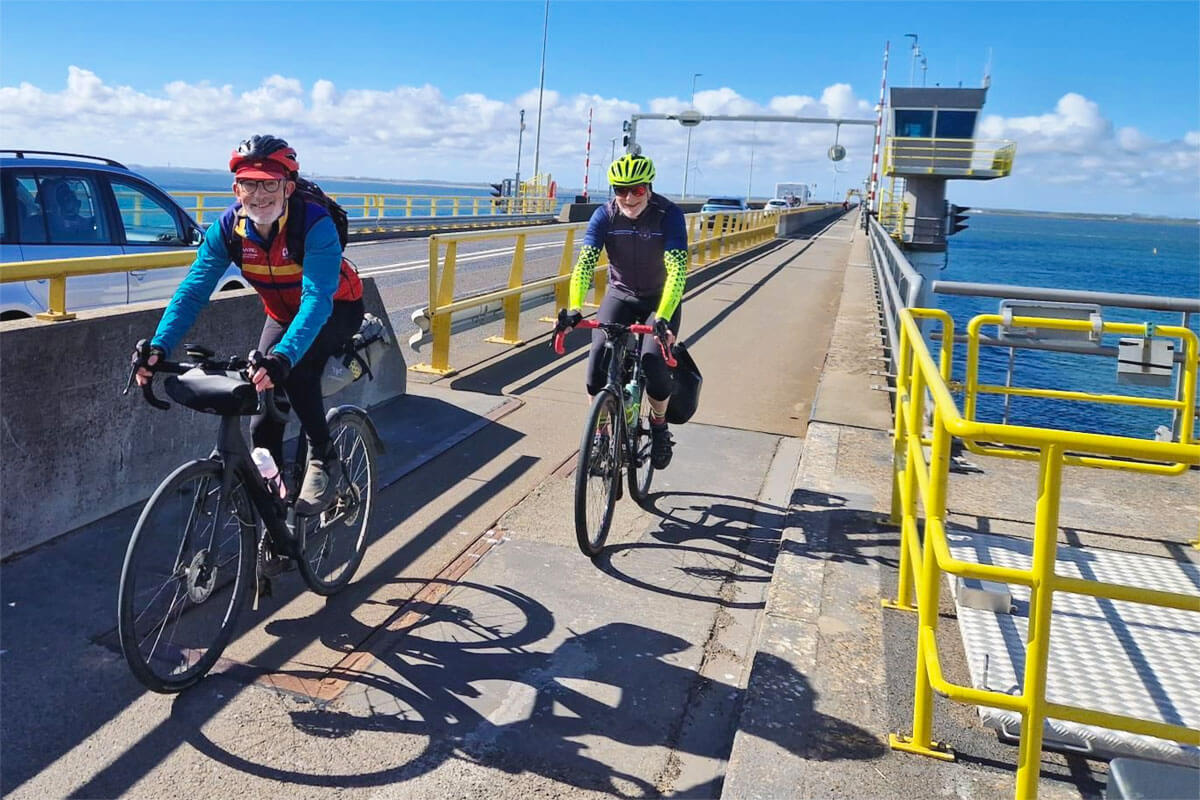
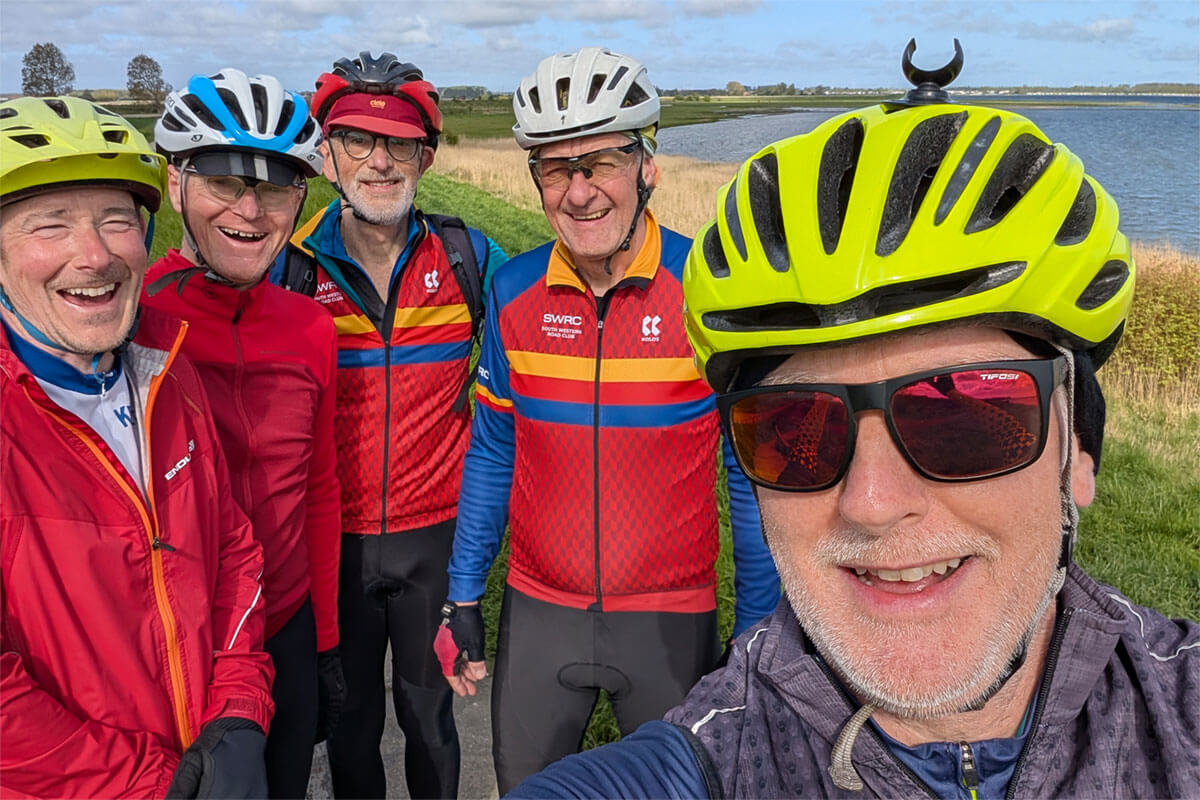
I was tucked in behind JR, the cycle path being rather narrow but at least completely separate from the stream of cars alongside. I couldn’t take the wind – literally – for long but JR reckoned later he was pulling 350w or so for those exposed 3 miles. I kept up at about 17mph or so, but was blowing hard! By the time we finally stopped for photos, DaveS had drifted back from us where he had the worst of both worlds – trying to keep up with no-one to shelter him!
All in all, it felt a good pull. Fortunately, just 5 miles up the road we arrived at the Watersnoodmuseum for an unusual interlude.
Watersnoodmuseum (Flood Museum) in Ouwerkerk
A visit to the Watersnoodmuseum was first suggested by DaveS. Until then I had not heard of it and it wasn’t on my radar.
Since we are a democratic bunch, we felt if Dave thought it worthwhile, we’d go and find out for ourselves. It was a bit of an eye opener.
The museum principally commemorates the Flood Disaster of 1953. A February storm in the North Sea involved such low pressure that the sea level rose dramatically; when it dropped the water surged south toward the Dutch coast and the English Channel.
In fact, Essex in the UK was badly affected with over 100 people killed. It’s still remembered to this day. But in the Netherlands, over 18,000 people lost their lives and 72,000 people were made homeless overnight. In many cases, they lost everything.
How could this happen? Principally, the outer dykes burst under the great weight of water with sea levels over 4m higher than normal. Once breached the water punched through lesser inland dykes, channeling the force. What’s more, the vast flooded area continued to flood day after day at each high tide.
Gradually, efforts were made to rebuild the dykes and part of that occurred at Ouwerkerk. The D-Day invasion of Normandy in WW2 involved the construction of the Mulberry harbour out of enormous concrete caissons (barges) some 20m in height and 100m long which were made in the UK and floated across the Channel.
With retained knowledge from the war, the UK built several more and sent them over to the Netherlands where they were sunk to plug breaches in the dykes. The Watersnoodmuseum uses the top 5m of the caissons at Ouwerkerk to house the museum. It’s rather surreal walking around inside the solution to a big problem (and a little chilly – take a jumper!).
We spent some time in the museum before enjoying an excellent lunch in the restaurant – soup, hard smoky cheese, something indeterminate deep fried – all very tasty.
What I took from the museum experience was an understanding of how Dutch culture is shaped by these natural disasters and how almost every part of the Netherlands is essentially a heavily engineered and constructed environment. The 1953 flood literally reshaped the Netherlands.
As we continued on our way to Rotterdam I reflected it’s no coincidence the Dutch have such impressive engineering expertise. It’s no coincidence that the Netherlands porous borders has made it a great trading nation over centuries, or that the Dutch spirit – Dutch resilience – has made them bold and forthright explorers and pioneers.
Rotterdam (or Anywhere)
If you are of a certain vintage you get this reference. If not, Rotterdam (or Anywhere) is a song by the Beautiful South and it’s a bit of an ear worm. Inevitably, any mention of Rotterdam reminds me of this, just as it’s hard not to think of Billy Joel’s song when you travel to Vienna. Or it might just be me!
In any case, we were still some 40 miles from our berth for the evening (quite literally; we were staying on a boat).
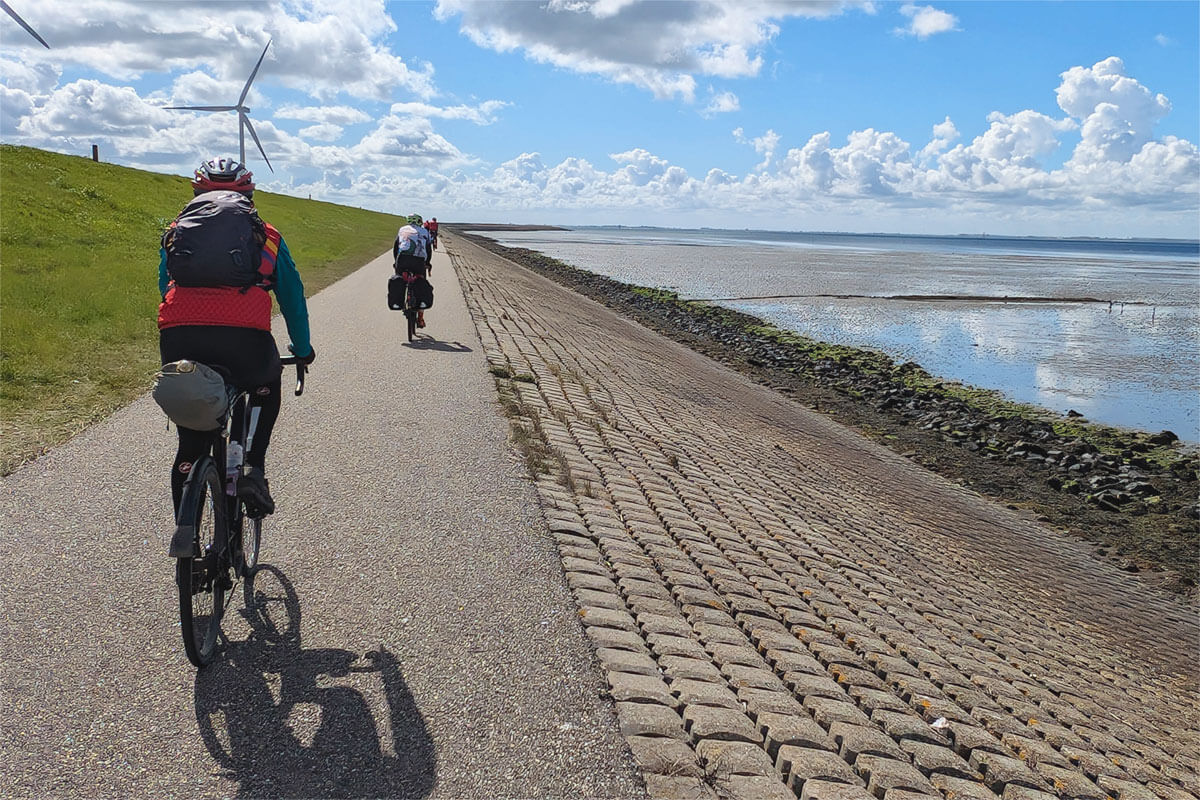
Our route tracked broadly east along the coast, crossing from one land mass to another over large sea going locks. The breeze was a bit of a constant, but not something to worry too much about.
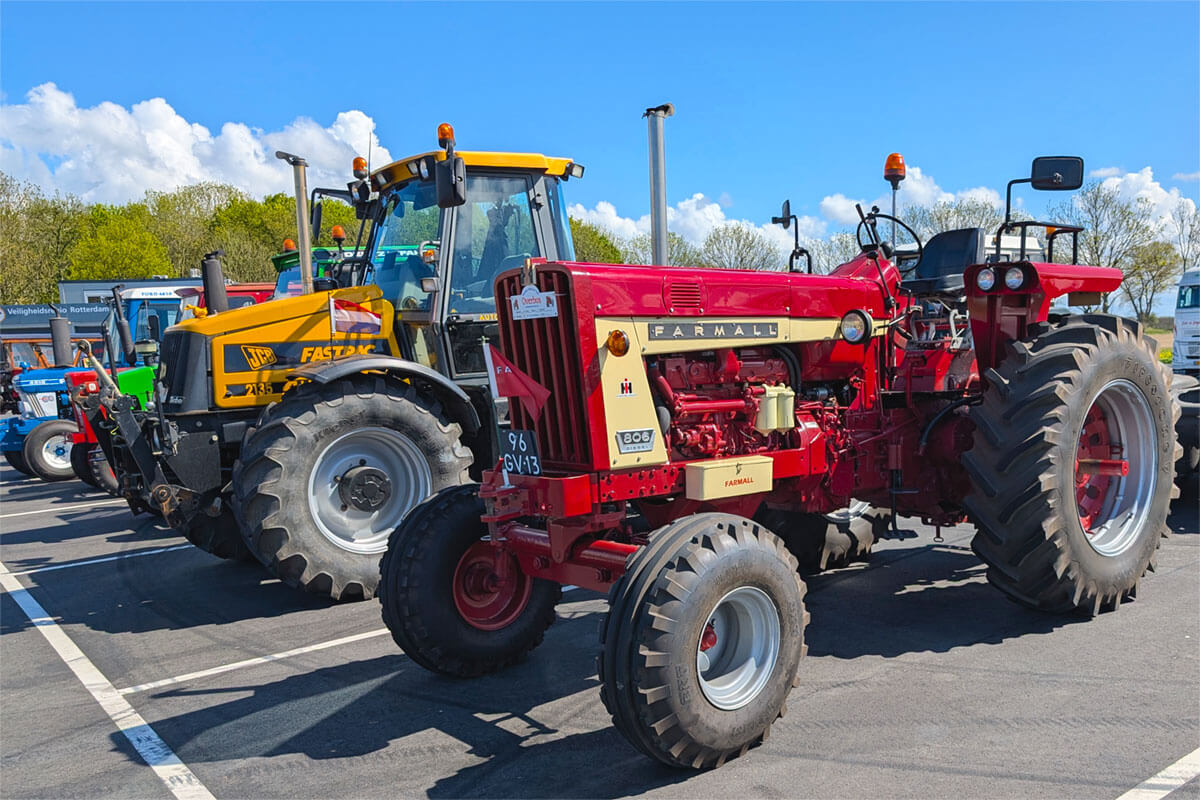
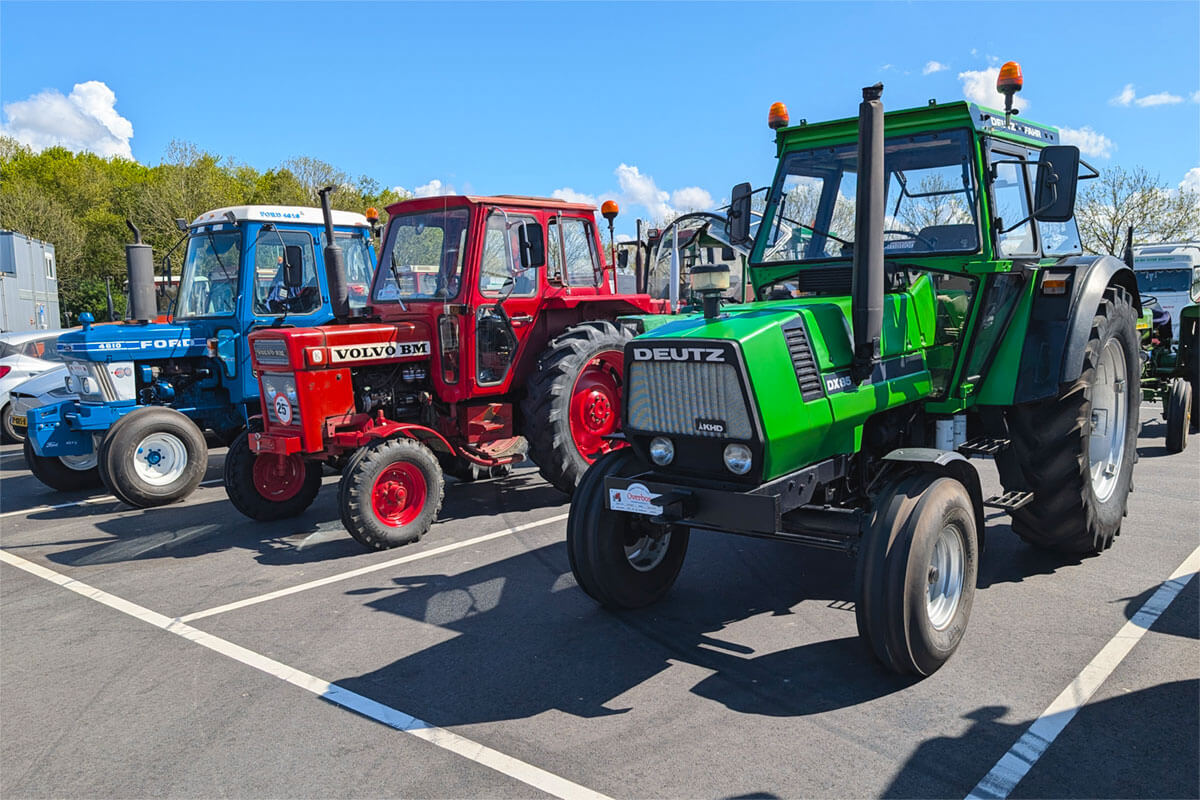
One highlight was finding a car park full of vintage tractors with their sturdy vintage tractor enthusiast owners near Achthuizen, something that would have appealed greatly to Elliot and ‘son of the soil’ MarkC were they with us.
Next up was crossing the Haringvliet waterway. For the approach we were alongside a busy road but both the road and cycle path have their own tunnel solution for crossing the wide waterway. We reached out lowest point of the day, obviously well below sea level in the tunnel although I lost GPS reception.
The cycle tunnel is wide, well lit but drops quite steeply before climbing up the other side. I found myself in just the right gear and tracked JR past the others quite easily. I got a shock when we exited to turn a corner and find a similar slope again ahead of me but dug in. While JR summited first, he reckons he was pulling nearly 500w with me a close but out of breath second!
Tulips and windmills
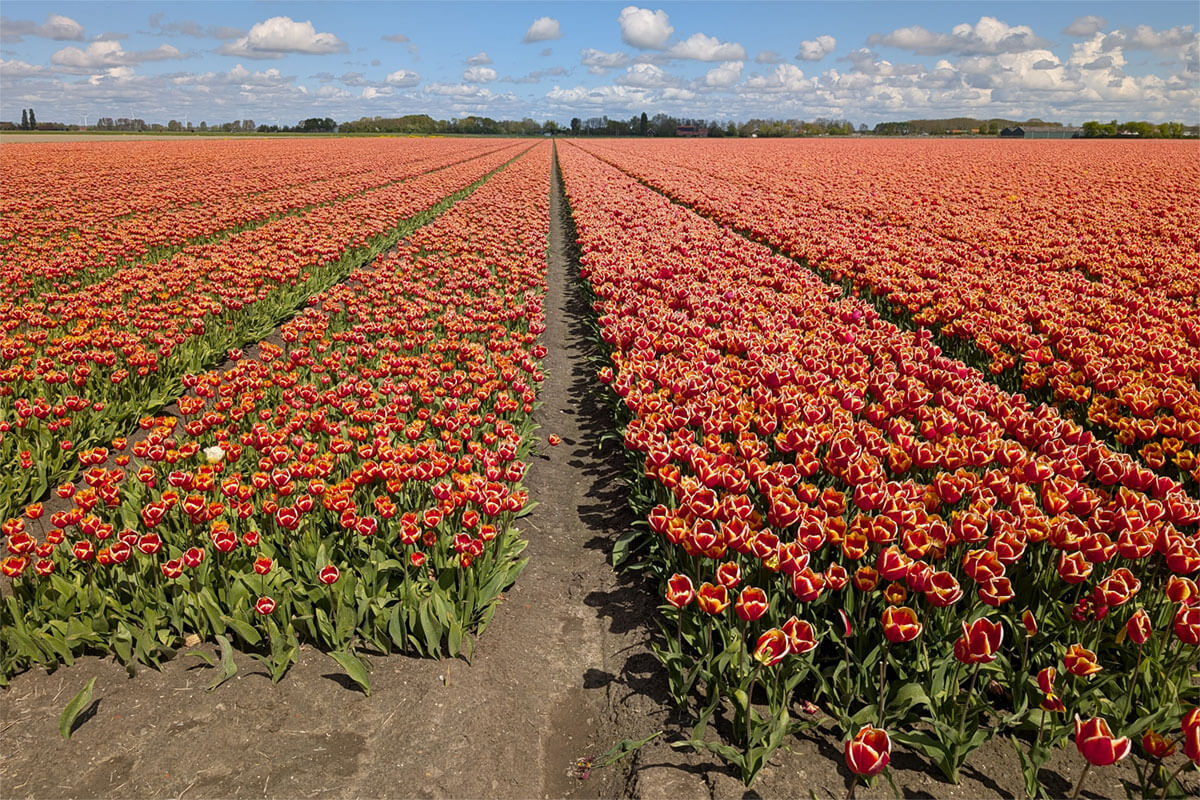
As we turned north for Rotterdam the landscape became gradually more agricultural (as opposed to the nature reserves around the coast). It was still resolutely flat of course.
Considering the time of year, we expected to see fields and fields of tulips. I wouldn’t say there were loads but those we did see made a striking sight and of course you do see the occasional vintage windmill. Things were feeling quite touristy!
One aspect that wasn’t feeling too rosy was my backside, and I don’t think I was the only one! After limited miles this year, riding 170 over three days was starting to takes its toll. It wasn’t any chafing (thankfully), but a bruised feeling around my sit bones.
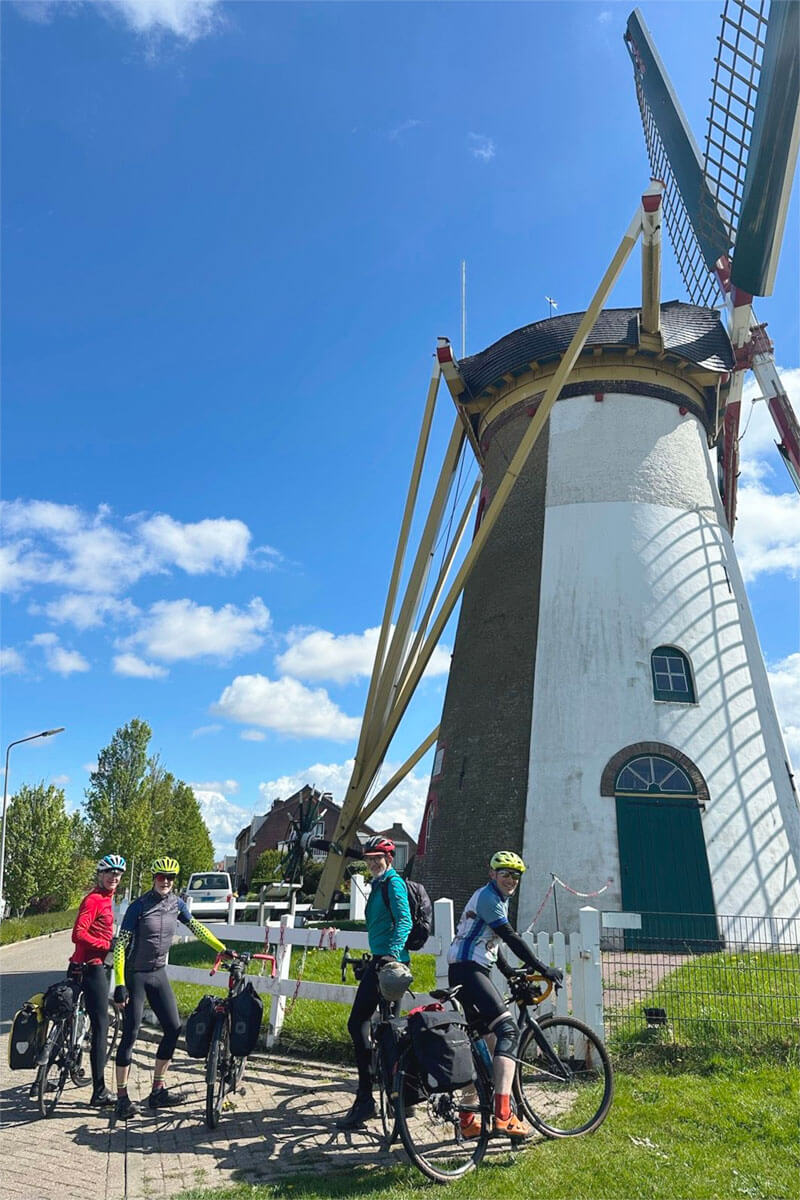
My neck on the other had continued to feel great as we closed inexorably on Rotterdam. We had a bit of a deadline because our accommodation for the night was a Dutch barge on the canal close to the center of Rotterdam.
It took a little navigating to find the precise location, not helped by temperatures that were pretty low and a cold northerly wind. Once we’d dropped our pace to town riding pace we lost warmth quickly.
Eventually after a little backtracking we found our berth in Binnenhaven. The idea of the barge was a bit of fun and turned out to be an experience we will long remember.
The company focuses on accommodation for foreign students and you can read whatever you like into that statement! Conditions were fairly basic but we all got a space to call our own, with Mark assuming the role of Tom the cabin boy up near the stern of the ship.
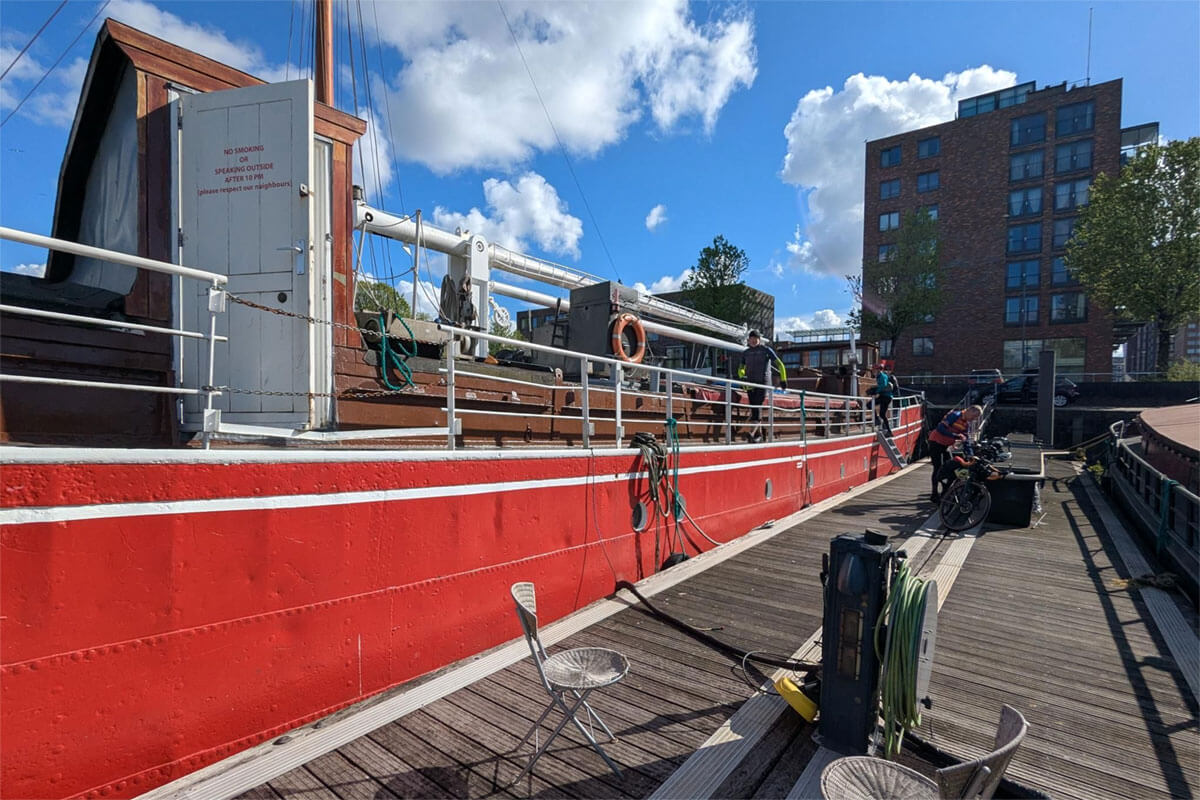
At least it was warm, dry and the barge didn’t sink on us! After a long day we headed off to a popular local restaurant – a kind of tapas place – where JR and Dave in particular took full advantage of a set price menu and as many dishes as you liked!
All in all a long and interesting day!
Every cyclist loves coffee!
☕Buy Matt a coffeeBe the first to reply
We really appreciate comments from our readers. If you have something to say, we'd love to hear from you.
()